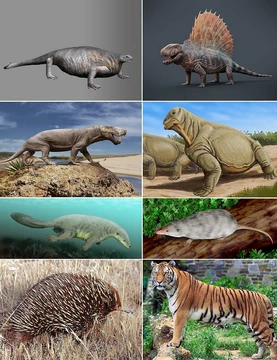
Lystrosaurus
A shovel-lizard that thrived after Earth's worst mass extinction.

Radim Holiš · CC BY-SA 3.0 cz
Its fossils have been found across Pangaea, including Antarctica, India, China, Mongolia, European Russia, South Africa, and possibly Australia and Mozambique. It survived the Permian-Triassic extinction event, Earth's most severe, and became the most common terrestrial vertebrate fossil in Early Triassic beds worldwide.
- diet
- Herbivorous
- distinctive_features
- Two tusk-like canines, horny beak, semi-sprawling gait, powerful forelimbs
- size
- Total length around 1 meter (3.3 ft); largest skull length about 27.8 cm
- fossil_distribution
- Antarctica, India, China, Mongolia, European Russia, South Africa, possibly Australia and Mozambique
Lore & Background
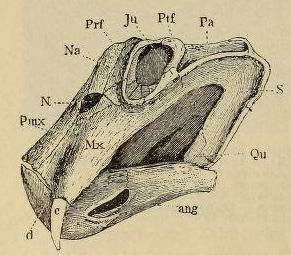
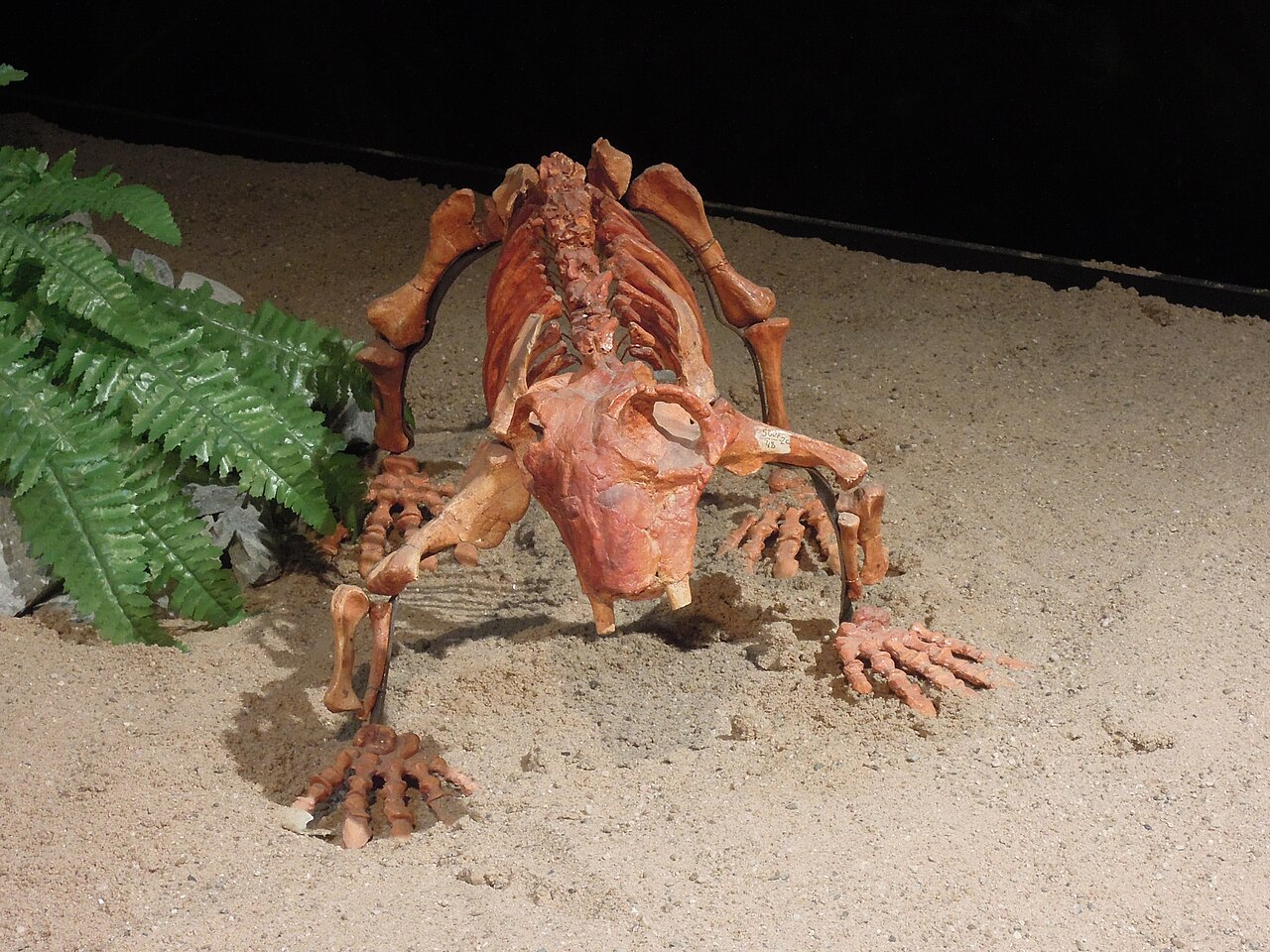
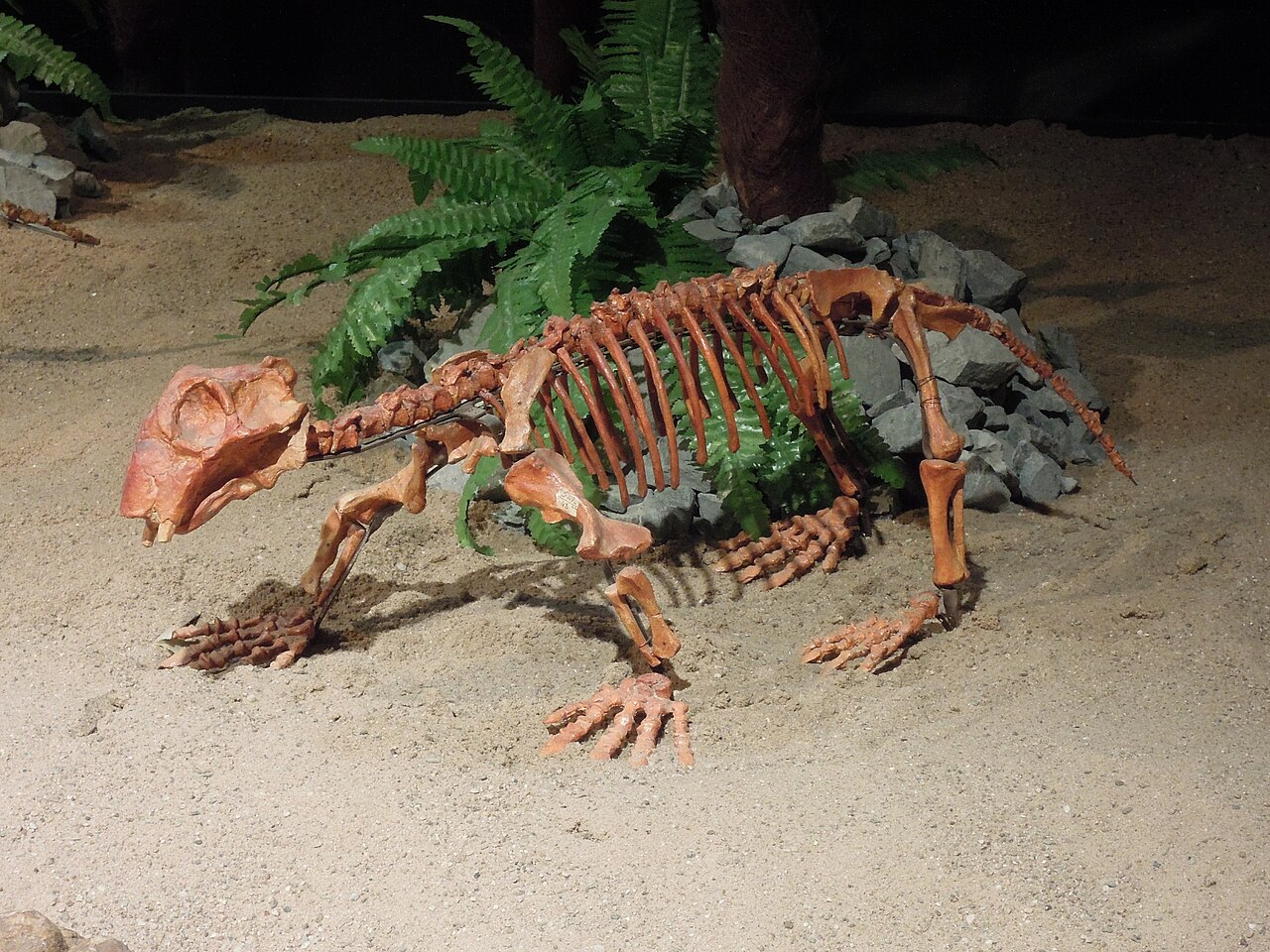
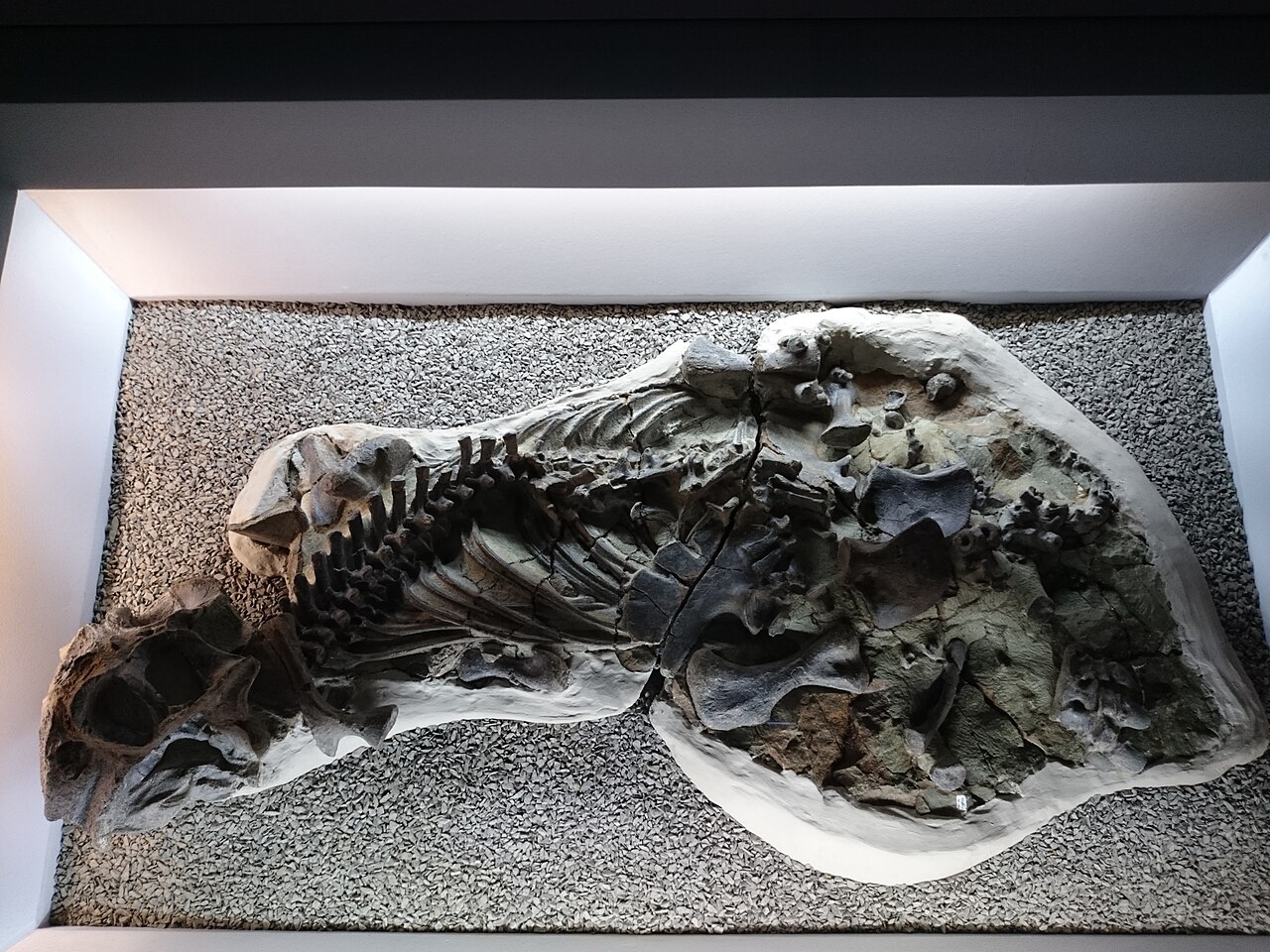
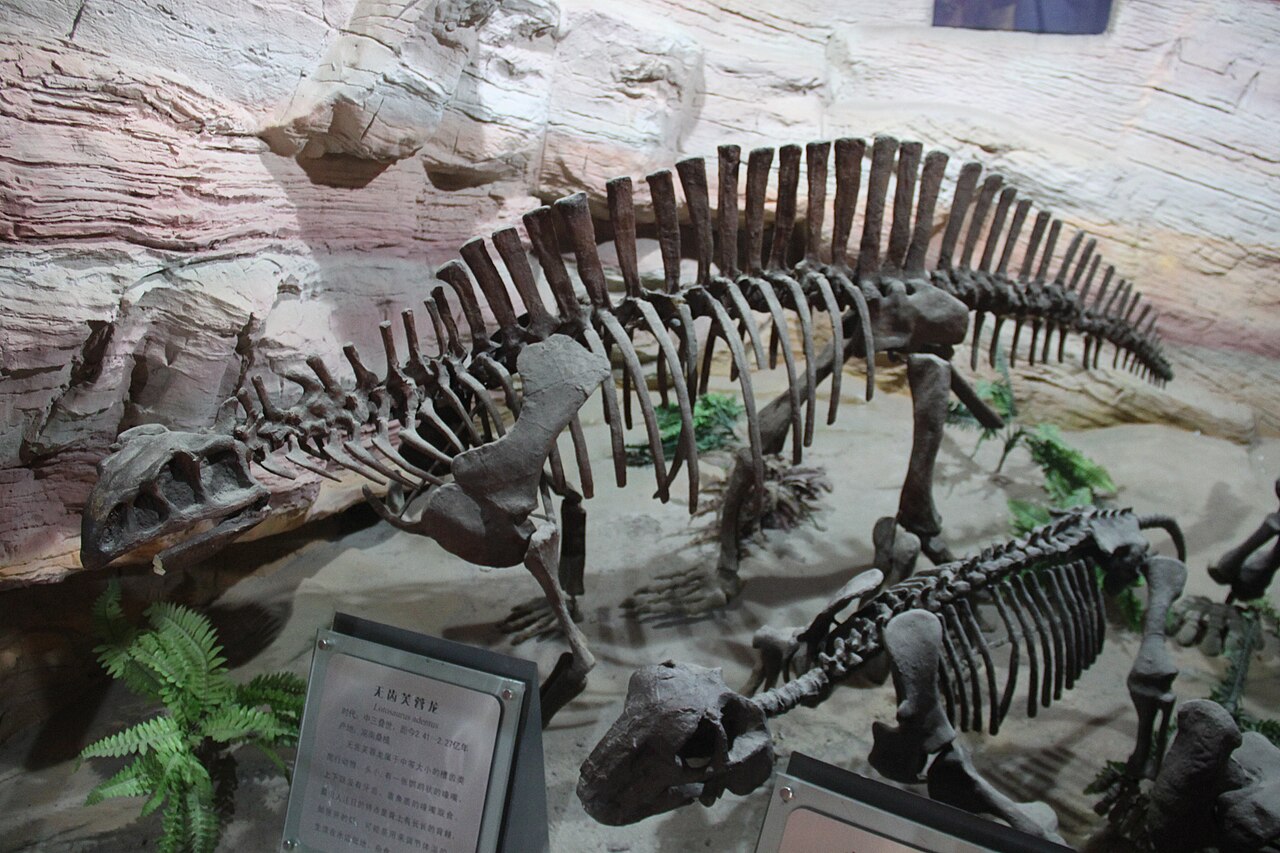
The first Lystrosaurus skull was discovered by Dr. Elias Root Beadle, a Philadelphia missionary and fossil collector. He wrote to paleontologist Othniel Charles Marsh but received no reply. Lystrosaurus was a heavily built herbivore with only two teeth—tusk-like upper canines—and a horny beak for biting vegetation. Its shoulder and hip joints indicate a semi-sprawling gait, and its robust forelimbs suggest it was a powerful digger that nested in burrows.
Reader's Guide
Lystrosaurus is significant primarily for its remarkable survival and dominance after the Permian-Triassic extinction event, the most severe mass extinction in Earth's history. While many species perished, Lystrosaurus thrived, becoming the most abundant terrestrial vertebrate in Early Triassic deposits worldwide. Its fossils are especially numerous in the Lystrosaurus Assemblage Zone of South Africa. Researchers have proposed various hypotheses for this success, including its burrowing behavior, semi-sprawling gait, and possible dietary adaptations. The genus also played a key role in supporting plate tectonic theory, as its presence on multiple continents—including Antarctica—provided strong evidence for the existence of the supercontinent Pangaea. Lystrosaurus maccaigi, the largest and most specialized species, did not survive the extinction, while L. curvatus, the least specialized, appears both before and after the boundary. The discovery of a curled embryonic individual suggests Lystrosaurus laid eggs with soft, leathery shells, and that young were relatively independent at birth.
Did You Know?
- Lystrosaurus means 'shovel lizard' from Ancient Greek words for 'shovel' and 'lizard'.
- It had only two teeth—a pair of tusk-like upper canines—and a horny beak.
- Mummified specimens from the Karoo Basin show it had dimpled, leathery, hairless skin.
The Skull That Ignited a Rivalry
The first Lystrosaurus skull was unearthed by Dr. Elias Root Beadle, a Philadelphia-based missionary who collected fossils as a personal passion. Eager to share his find, Beadle wrote to the towering figure of paleontology, Othniel Charles Marsh, but the letter went unanswered. Instead, Marsh's long-time rival Edward Drinker Cope seized the opportunity, describing and naming the animal Lystrosaurus in 1870 through the Proceedings of the American Philosophical Society. The name fuses two Ancient Greek roots: listron, meaning a shovel or tool for smoothing, and sauros, meaning lizard. In a twist that still puzzles historians, Marsh eventually purchased that very skull in May 1871, even though it had already been formally described. His motivation remains ambiguous; he may simply have wanted to scrutinize Cope's illustration and measurements against the physical specimen himself.
A Shovel-Lipped Digger of the Karoo
Lystrosaurus was a stocky, heavily built herbivore roughly one meter in total length. As a dicynodont therapsid, it carried only two teeth—a pair of tusk-like canines—while the remainder of its jaw was almost certainly sheathed in a horny beak designed for cropping and biting off vegetation. Its forelimbs were even more robust than its hindlimbs, and the architecture of its shoulder and hip joints points to a semi-sprawling gait rather than a fully erect one. Researchers interpret this powerful build as evidence of an accomplished digger, likely constructing burrows in which it nested. The largest known individuals, assigned to L. maccaigi, reached a skull length of about 27.8 centimeters. A curious pattern also emerges geographically: specimens recovered from the Northern Hemisphere tend to be larger than those found in the Southern Hemisphere, though the underlying cause of this disparity remains open to discussion.
Thriving in the Ashes of the Great Dying
The Permian-Triassic extinction event, roughly 252 million years ago, ranks as the most severe mass extinction in the history of life on Earth. Lystrosaurus, however, did not merely scrape through the catastrophe; it flourished in the immediate aftermath. Its fossils are, by a wide margin, the most abundant terrestrial vertebrate remains in Early Triassic deposits around the globe. In South Africa, an entire stratigraphic unit—the Lystrosaurus Assemblage Zone—bears the animal's name as a testament to its post-extinction dominance. Researchers have put forward various hypotheses to explain why this particular dicynodont survived when so many others perished, though no single answer has achieved consensus. Notably, L. maccaigi, restricted to Permian sediments, apparently did not survive the event, while the less specialized L. curvatus appears on both sides of the boundary, making it a useful marker for the Permian-Triassic transition.
A Fossil That Moved Continents
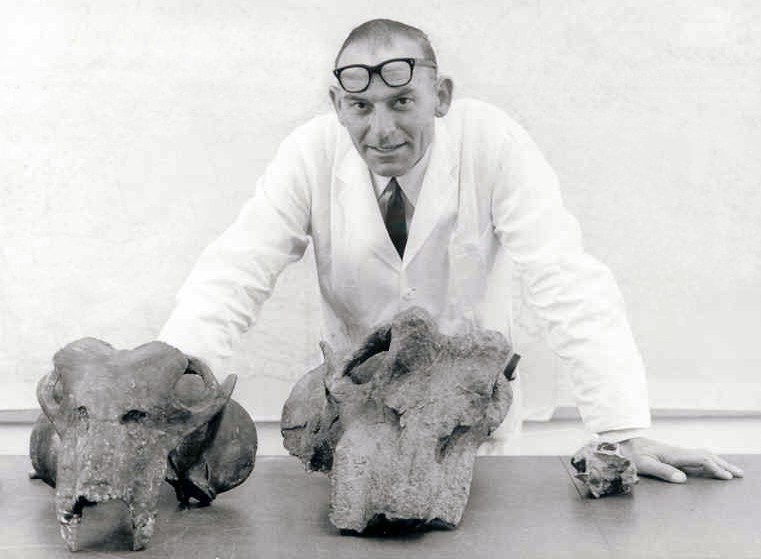
Lystrosaurus fossils have been recovered from what is now Antarctica, India, China, Mongolia, European Russia, South Africa, and possibly Australia and Mozambique—a distribution spanning the ancient supercontinent Pangaea. The richest assemblages come from the Balfour and Katberg Formations of the Karoo basin in South Africa, where the sheer volume of material has allowed the longest and most detailed species-level study. In 1969–1970, Edwin H. Colbert and his team recovered Lystrosaurus fossils at Coalsack Bluff in the Transantarctic Mountains. Because the same genus had already been documented in the lower Triassic of southern Africa, India, and China, this Antarctic find provided powerful independent support for the then-emerging hypothesis of plate tectonics. A single land-dwelling animal appearing on multiple now-separated landmasses was difficult to explain without continental drift. Today, four to six species are generally recognized, a far cry from the 23 proposed during the 1930s through 1970s.
Gallery
Frequently Asked Questions
What is Lystrosaurus?
Lystrosaurus is a small, herbivorous synapsid from the Early Triassic, roughly one meter in total length, often nicknamed the 'shovel-lizard' for its beak and digging forelimbs. It is entry #19 in the Prehistoric Synapsids series.
What does Lystrosaurus look like?
It sported a pair of prominent tusk-like canines, a horny beak for cropping plant matter, and a semi-sprawling stance braced by powerful forelimbs. Its skull could reach about 27.8 cm, giving the animal a stout, almost pig-like silhouette.
How did Lystrosaurus survive the Permian-Triassic extinction?
While most other land vertebrates were wiped out in Earth's most devastating mass extinction, Lystrosaurus not only made it through but went on to dominate Early Triassic ecosystems. It became the single most common terrestrial vertebrate fossil in Triassic beds worldwide.
Where have Lystrosaurus fossils been found?
Its remains have turned up across former Pangaea—South Africa, Antarctica, India, China, Mongolia, European Russia, and possibly Australia and Mozambique. That extraordinary spread is a direct testament to how thoroughly it colonized the post-extinction world.
Why is Lystrosaurus important to prehistoric synapsid fans?
It embodies one of the most dramatic survival narratives in vertebrate history, thriving in the wake of a catastrophe that eliminated roughly 90 % of species. As the quintessential 'everywhere' animal of the Early Triassic, it anchors the fan encyclopedia's story of synapsid resilience.
More in Prehistoric Synapsids 1-19
Spotted an error? Know more?
This is a living reference — every entry is fact-audited, and reader corrections feed straight into our audit queue. Suggest an edit · See this site's audit record