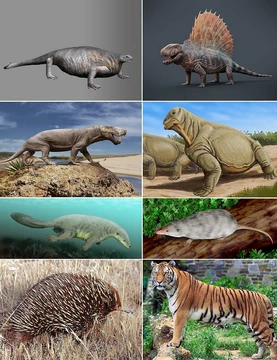
Edaphosaurus
Early herbivorous synapsid with a distinctive sail and tooth plates.

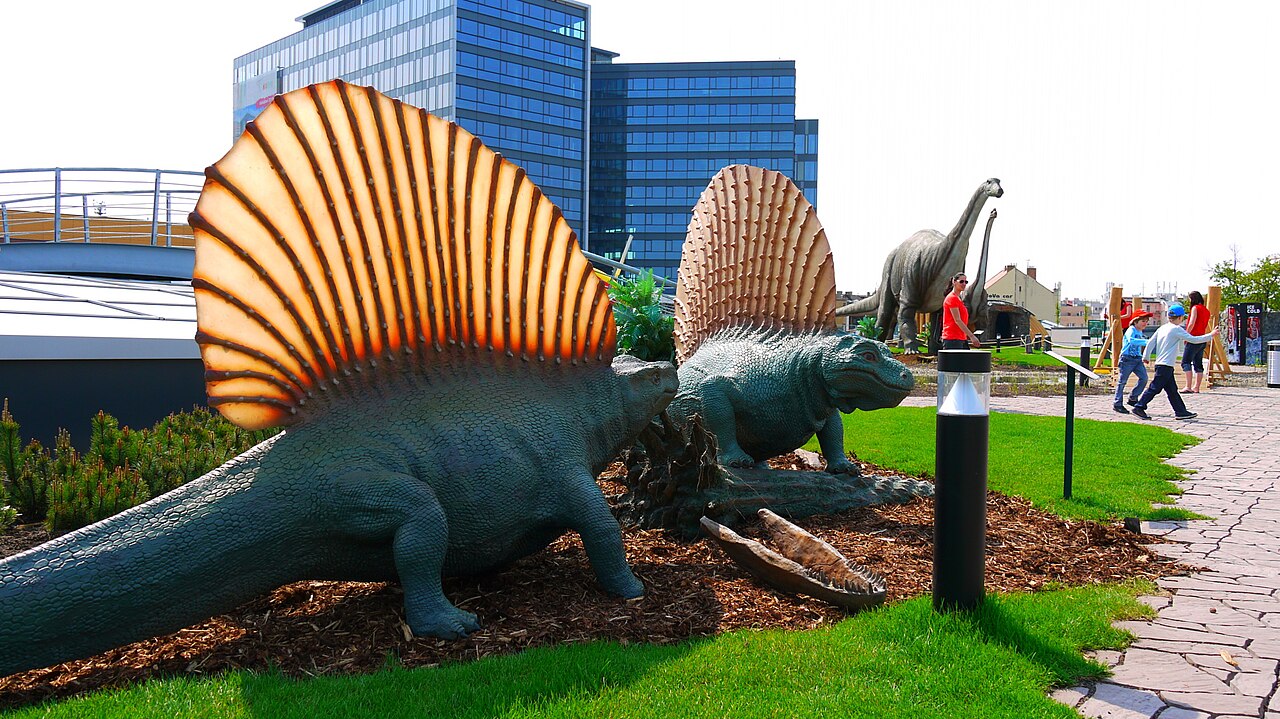
DinoTeam · CC BY-SA 3.0
Edaphosaurus is important as one of the earliest-known, large, plant-eating (herbivorous), amniote tetrapods (four-legged land-living vertebrates).
- field
- Paleontology
- known_for
- One of the earliest large herbivorous amniote tetrapods; neural spine sail on its back
- length
- 0.5 to 3.5 meters (1.6 to 11.5 ft)
Lore & Background
Cope noted the "dense body of teeth" on both jaws and used the term "dental pavement." The type species name pogonias means "bearded" in Greek, referring to the enlarged inward sloping chin on the lower jaw. Cope classified Edaphosaurus as a member of his Pelycosauria and created the new family Edaphosauridae. The type material did not include any of the post-cranial skeleton apart from an axis vertebra, and Cope was unaware of the animal's large sail, a feature then known only for Dimetrodon. The head of Edaphosaurus was short, relatively broad, triangular in outline, and remarkably small compared to its body size. The deep lower jaw likely had powerful muscles, and the marginal teeth along the front and sides of its jaws had serrated tips. Back parts of the roof of the mouth and the inside of the lower jaw held dense batteries of peglike teeth, forming a broad crushing and grinding surface. Its jaw movements were propalinal (front to back). Early descriptions suggested that Edaphosaurus fed on invertebrates such as mollusks, but paleontologists now think that Edaphosaurus ate plants, although tooth-on-tooth wear between its upper and lower tooth plates indicates only "limited processing of food" compared to other early plant-eaters such as Diadectes. The sail along the back of Edaphosaurus was supported by hugely elongated neural spines from neck to lumbar region, connected by tissue in life. When compared with the sail of Dimetrodon, the vertebral spines are shorter and heavier, and bear numerous small crossbars. Edaphosaurus and other members of the Edaphosauridae evolved tall dorsal sails independently of sail-back members of the Sphenacodontidae such as Dimetrodon and Secodontosaurus that lived at the same time, an unusual example of parallel evolution. The function(s) of the sail in both groups is still debated, with suggestions including camouflage, wind-powered sailing over water, anchoring for extra muscle support, protection, fat storage, body-temperature control, or sexual display and species recognition.
Reader's Guide
Edaphosaurus holds a significant place in paleontology as one of the earliest-known large herbivorous amniote tetrapods, representing a key step in the evolution of terrestrial ecosystems. Its specialized tooth plates and propalinal jaw movements indicate an adaptation to processing tough plant material, though the limited wear suggests its digestive strategy differed from that of contemporary herbivores like Diadectes. The sail, with its distinctive crossbars, is a notable example of parallel evolution with the sphenacodontid Dimetrodon, and its debated functions—ranging from thermoregulation to display—highlight ongoing questions about the biology of early synapsids. The discovery of Melanedaphodon, a sister taxon with intermediate tooth batteries, provides insight into the transition from insectivory to herbivory within the edaphosaurids. The slow growth rate and likely ectothermic metabolism of Edaphosaurus, as inferred from bone histology, contrast with the faster growth of Dimetrodon, suggesting different metabolic strategies among early synapsids. Fossils from North America and fragmentary remains from Germany indicate a broad geographic range, and the distinct sail shapes across species suggest evolutionary trends in display or other functions.
Did You Know?
- Edaphosaurus is named for its 'dental pavement' of dense teeth on both upper and lower jaws.
- The sail of Edaphosaurus had crossbars on its neural spines, unlike the sail of Dimetrodon.
- Edaphosaurus grew more slowly than the predator Dimetrodon, reflecting a lower metabolism.
- The recently described Melanedaphodon is a sister taxon to Edaphosaurus and represents a transitional stage from a diet of hard-shelled invertebrates to fibrous plants.
Discovery & the Name
Edaphosaurus entered the scientific record in 1882 when American paleontologist Edward Drinker Cope formally described the genus. Cope chose the name to highlight what he considered the animal's most striking dental feature: a dense "pavement" of teeth lining both the upper and lower jaws. The Greek roots edaphos (pavement) and sauros (lizard) combine to give us "pavement lizard," a meaning that older paleontological names like Edaphodon (1838, "pavement tooth") confirm as Cope's clear intent. Despite this, the name is frequently rendered as "earth lizard" or "ground lizard" in popular writing, a translation that drifts from what Cope actually meant. The first specimens came from the Texas Red Beds, and subsequent finds expanded the known range across New Mexico, Oklahoma, West Virginia, and Ohio. Fragmentary material has even surfaced in eastern Germany, stretching the genus's footprint into Central Europe. All of these fossils date to a window between roughly 303.4 and 272.5 million years ago, spanning the Late Carboniferous into the Early Permian.
Skull & the Machinery of Feeding
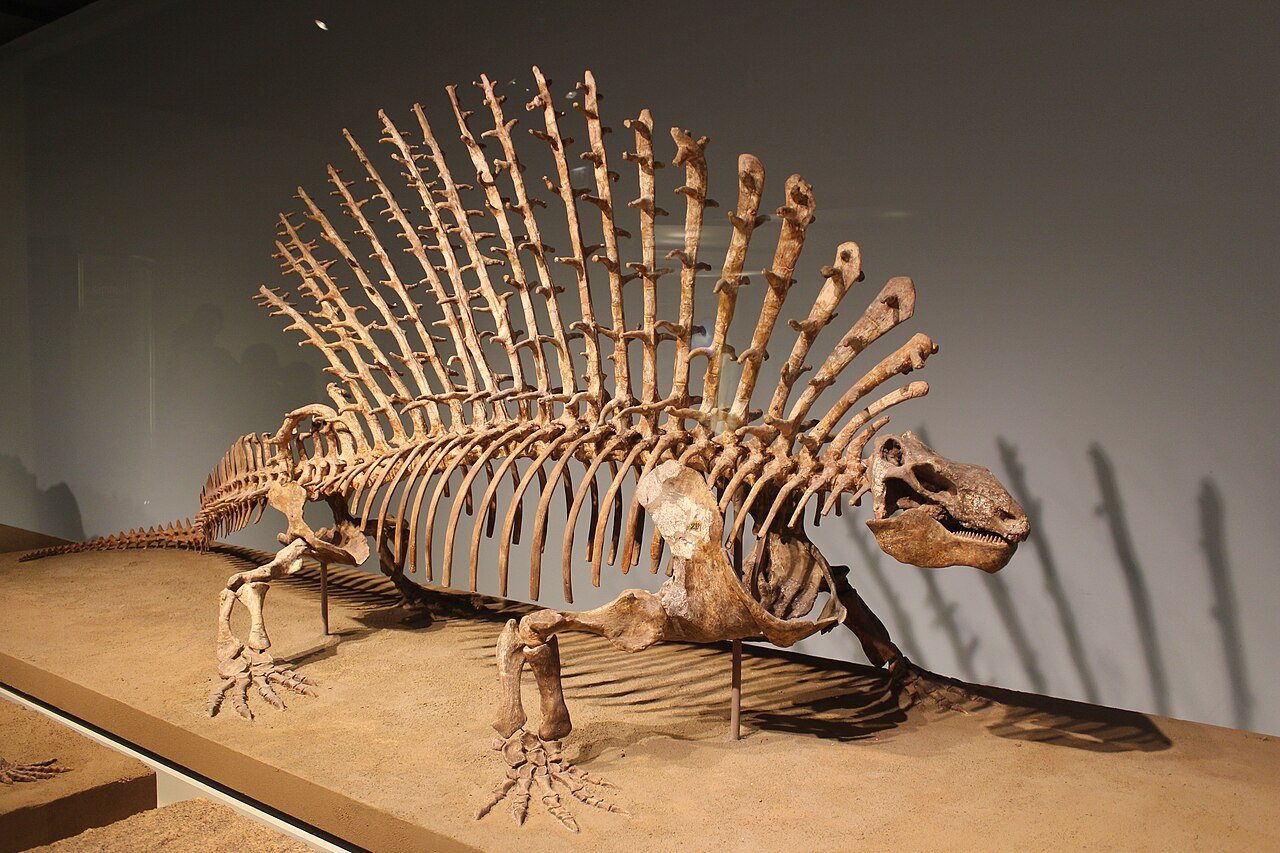
The skull of Edaphosaurus is deceptively small relative to its body, short and broad with a triangular outline. Its deep lower jaw housed powerful musculature, and the marginal teeth along the front and sides carried serrated tips suited to snipping bite-sized fragments from tough terrestrial vegetation. Behind those front teeth, the roof of the mouth and the inner surface of the lower jaw held dense clusters of peglike teeth that formed broad crushing and grinding surfaces on each side. Jaw movement was propalinal, sliding front-to-back rather than side-to-side. Early researchers, looking at those grinding plates, proposed that Edaphosaurus crushed hard-shelled invertebrates like mollusks. Modern paleontologists instead view it as a plant-eater, though tooth-on-tooth wear patterns suggest its processing of food was more limited than that of the contemporary nonamniote Diadectes. Like other herbivores, it likely relied on a large gut and symbiotic bacteria to break down cellulose and other indigestible plant compounds.
The Sail: Form, Function, and Parallel Evolution
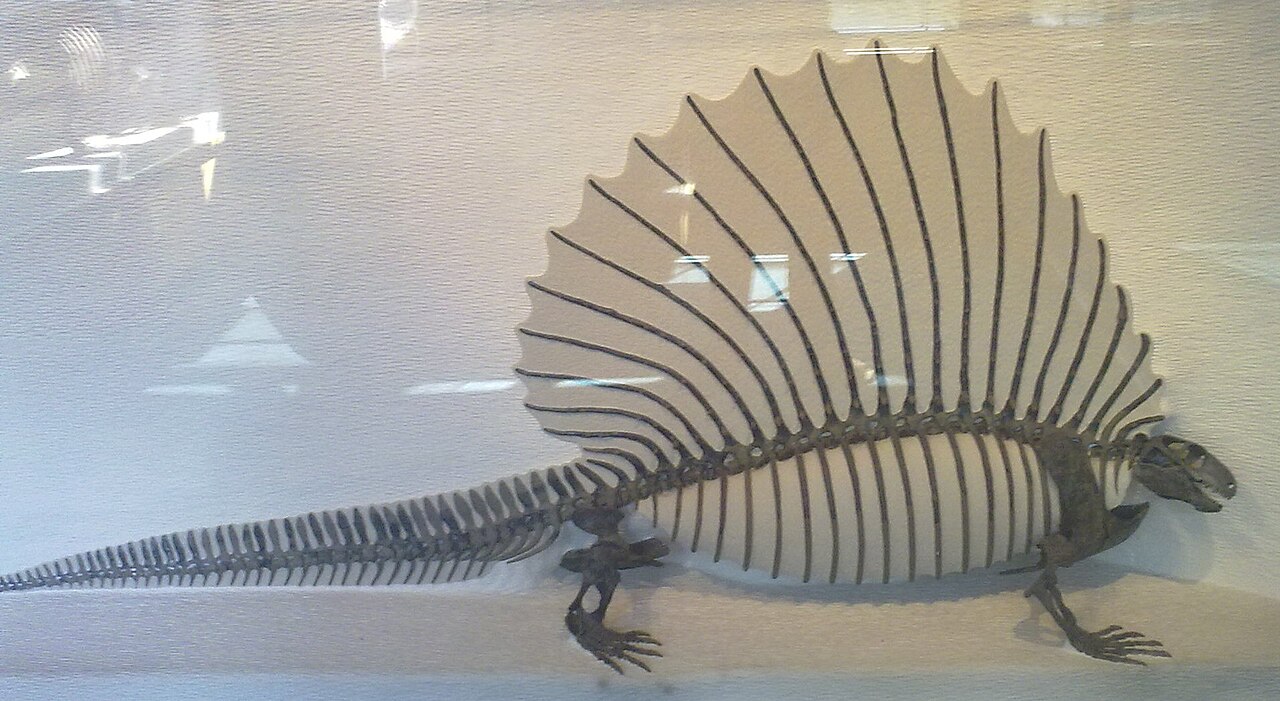
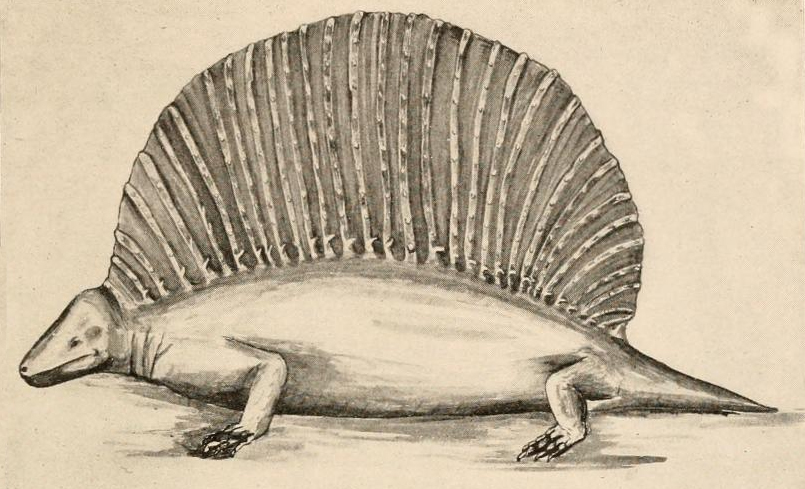
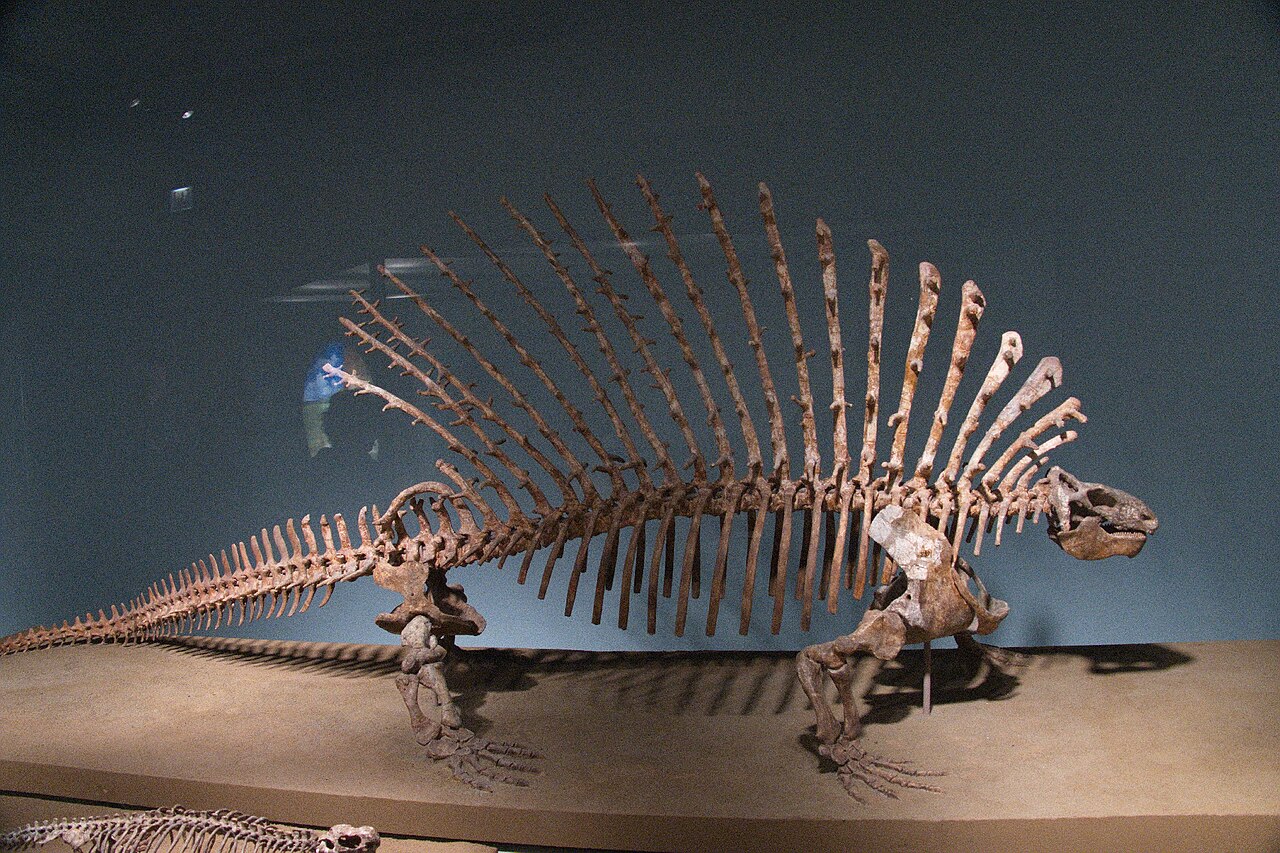
Running from the neck through the lumbar region, Edaphosaurus bore a sail supported by enormously elongated neural spines, connected in life by soft tissue. Compared with the sail of the better-known Dimetrodon, Edaphosaurus's spines were shorter, heavier, and studded with numerous small crossbars. The two lineages evolved their sails independently, a striking case of parallel evolution between Edaphosauridae and Sphenacodontidae. What the sail actually did remains hotly debated. Proposed roles include camouflage, wind-assisted movement over water, anchoring extra muscle for backbone rigidity, predator defense, fat storage, thermoregulation, and sexual display or species recognition. Romer and Price imagined the bony tubercles embedded in skin, supporting a fat deposit analogous to a camel's hump. Bennett countered that the projections were exposed to air, generating turbulence that would enhance cooling. More recent microscopic bone-structure analyses have cast doubt on a thermoregulatory role and point more strongly toward a display function. Across described species, sail height, spine curvature, and crossbar shape vary, with a trend toward fewer but larger projecting processes over time.
A Pioneering Plant-Eater in a Shifting World
Edaphosaurus occupies a pivotal spot in the history of land vertebrates as one of the earliest known large, herbivorous amniote tetrapods. Its evolutionary neighborhood helps trace how edaphosaurids shifted their diets. The earlier Ianthasaurus lacked tooth plates entirely and fed on insects. Melanedaphodon, described from Middle Pennsylvanian deposits in North America, sits as a sister taxon to Edaphosaurus and represents a transitional stage: it possessed large bulbous marginal teeth alongside a moderately developed palatal tooth battery, bridging the gap between a diet of hard-shelled invertebrates and the fibrous plant material that Edaphosaurus processed. Within the genus itself, four species are recognized, ranging from the 0.5-metre, lighter forms up to E. pogonias at 3.5 metres and 200 kg, with E. cruciger reaching 3 metres and 150 kg. All shared the broad ribcage, short robust limbs, and deep tail that characterized the body plan, while the cervical vertebrae remained reduced in length to accommodate the tiny head.
Gallery
Frequently Asked Questions
What is Edaphosaurus?
Edaphosaurus is a well-known early synapsid that lived during the late Carboniferous to early Permian periods. It is recognized as one of the first large, four-legged land vertebrates to feed exclusively on plants.
What was the sail on Edaphosaurus's back actually for?
The tall neural-spine sail likely served as a thermoregulation surface, helping the animal absorb or shed heat depending on the time of day. Some researchers also suggest it may have played a role in visual display or species recognition, though the exact function remains debated.
How big did Edaphosaurus get?
Specimens range from roughly 0.5 meters to about 3.5 meters (1.6–11.5 feet) in total length, meaning the species included both small juveniles and much larger adults. This size span makes it one of the earliest tetrapods to reach a genuinely large body plan.
What did Edaphosaurus eat and how did it process food?
It was a strict herbivore, grinding tough plant material with broad, flat tooth plates rather than sharp teeth. This dental arrangement allowed it to break down fibrous vegetation in an era when very few other land animals were specialized plant-eaters.
Why do paleontologists consider Edaphosaurus significant?
It represents one of the earliest examples of a large, specialized herbivorous amniote on land, filling a dietary niche that was previously rare among tetrapods. Its distinctive sail and tooth plates also make it one of the most recognizable and frequently cited early synapsids in the fossil record.
More in Prehistoric Synapsids 1-19
Spotted an error? Know more?
This is a living reference — every entry is fact-audited, and reader corrections feed straight into our audit queue. Suggest an edit · See this site's audit record