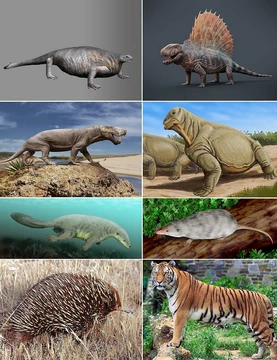
Dimetrodon
Permian synapsid with a distinctive sail, related to mammals.

Amphibol · CC BY-SA 4.0
It is often mistaken for a dinosaur but became extinct some 40 million years before dinosaurs appeared. Dimetrodon is more closely related to mammals than to reptiles, belonging to the sister family to therapsids, which includes the direct ancestor of mammals.
- length
- 1.7–4.6 m (5.6–15.1 ft) for most species
- field
- Paleontology
- known_for
- Large neural spine sail on its back; apex predator of Cisuralian ecosystems; often mistaken for a dinosaur
Lore & Background
Most fossils come from the Red Beds of Texas and Oklahoma, with additional finds in Germany. In the early 20th century, E. C. Case and later Alfred Romer studied many Dimetrodon specimens. New specimens were later found in Utah, Arizona, New Mexico, and Ohio. The sail's function is debated; it may have been used for thermoregulation, spine stabilization, or courtship display, with recent studies arguing against heat regulation as its main purpose.
Reader's Guide
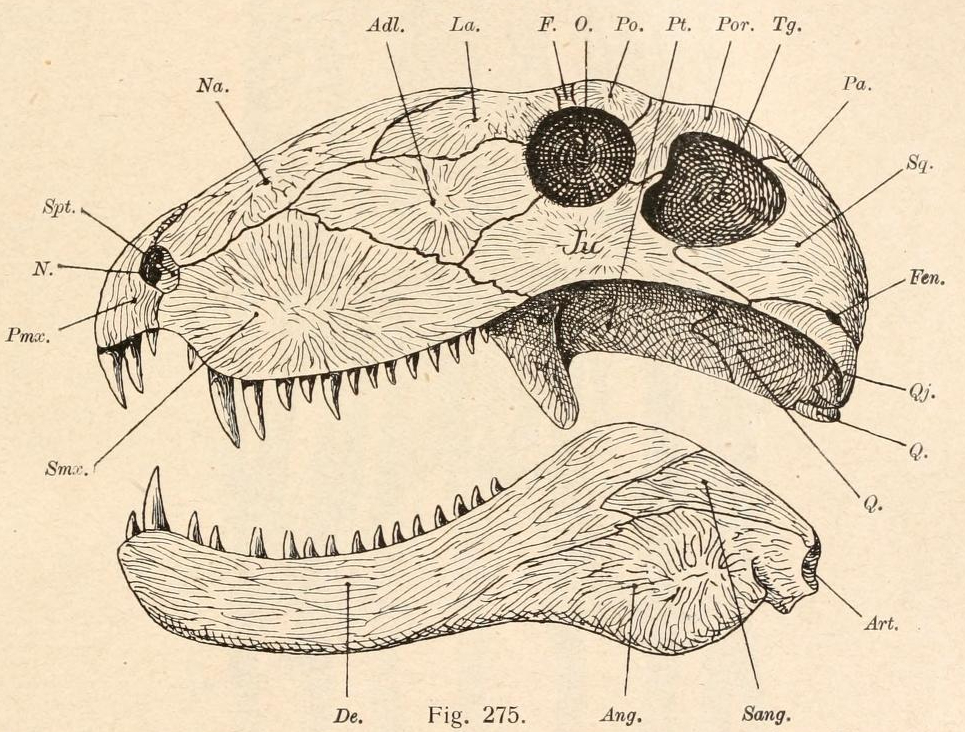
Dimetrodon is significant as one of the best-known non-mammalian synapsids, illustrating the transition from reptile-like ancestors to mammals. Its sail, composed of elongated neural spines, is an iconic feature of Permian fauna. Despite popular culture often depicting it alongside dinosaurs, Dimetrodon went extinct in the middle Permian, long before dinosaurs evolved. Its skull has a single temporal fenestra behind each eye, a synapsid trait that distinguishes it from reptiles and birds. The genus includes over a dozen species, ranging from small forms like D. teutonis (about 60 cm long) to large apex predators like D. grandis. The discovery of fossils in Germany and the western United States challenged earlier theories of geographic isolation. The name 'pelycosaurs' once used for such animals is now considered obsolete, replaced by 'basal synapsids.' Dimetrodon's legacy lies in its role as a key example of early synapsid diversity and the evolutionary path toward mammals.
Did You Know?
- Dimetrodon is often mistaken for a dinosaur but became extinct about 40 million years before dinosaurs appeared.
- The smallest known species, Dimetrodon teutonis, was about 60 cm long and weighed only 1–2 kg.
- The sail may have been used for courtship display rather than thermoregulation; sail size relative to body size varies among species and does not follow a simple inverse pattern.
The Sail and the Body
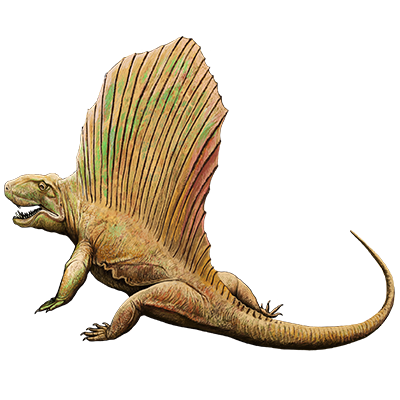
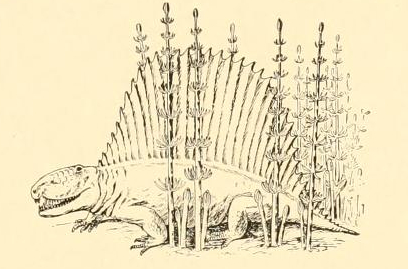
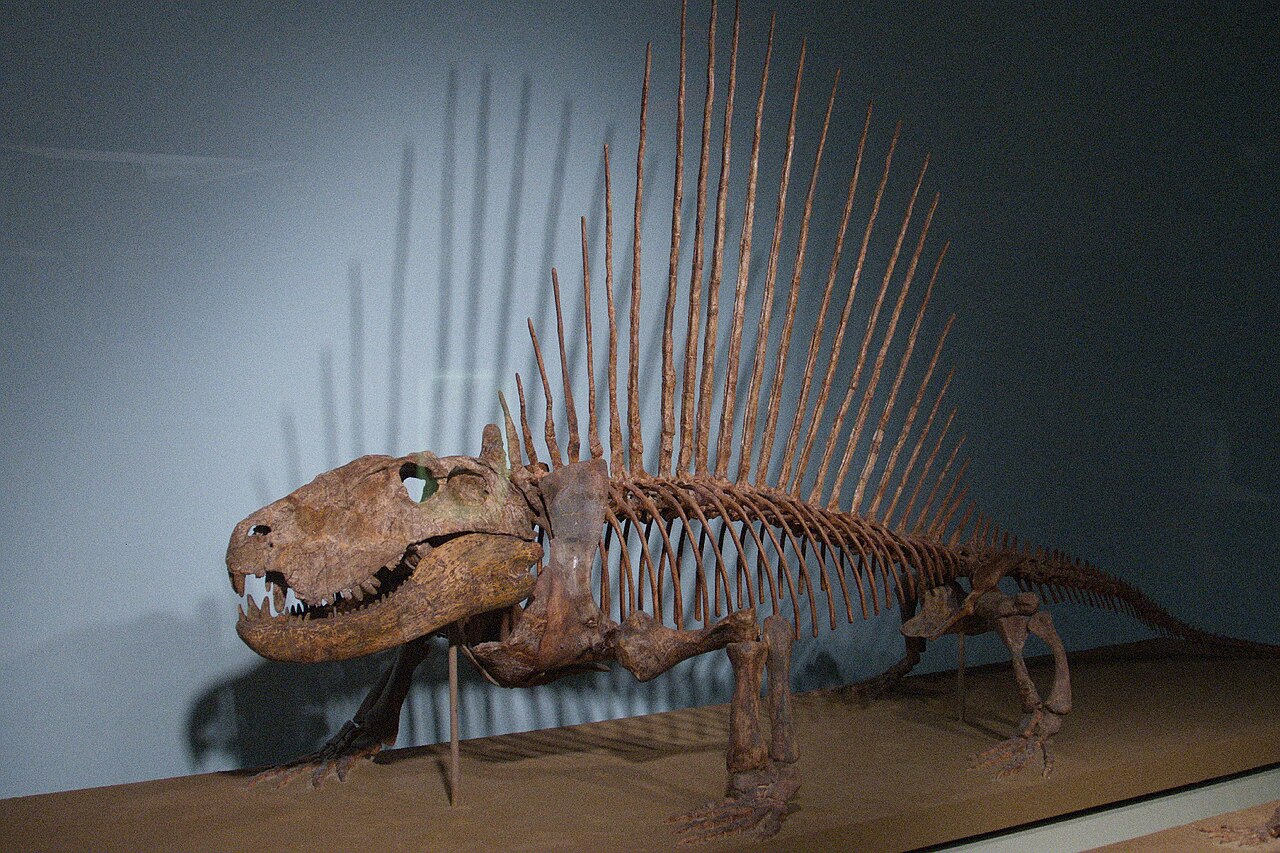
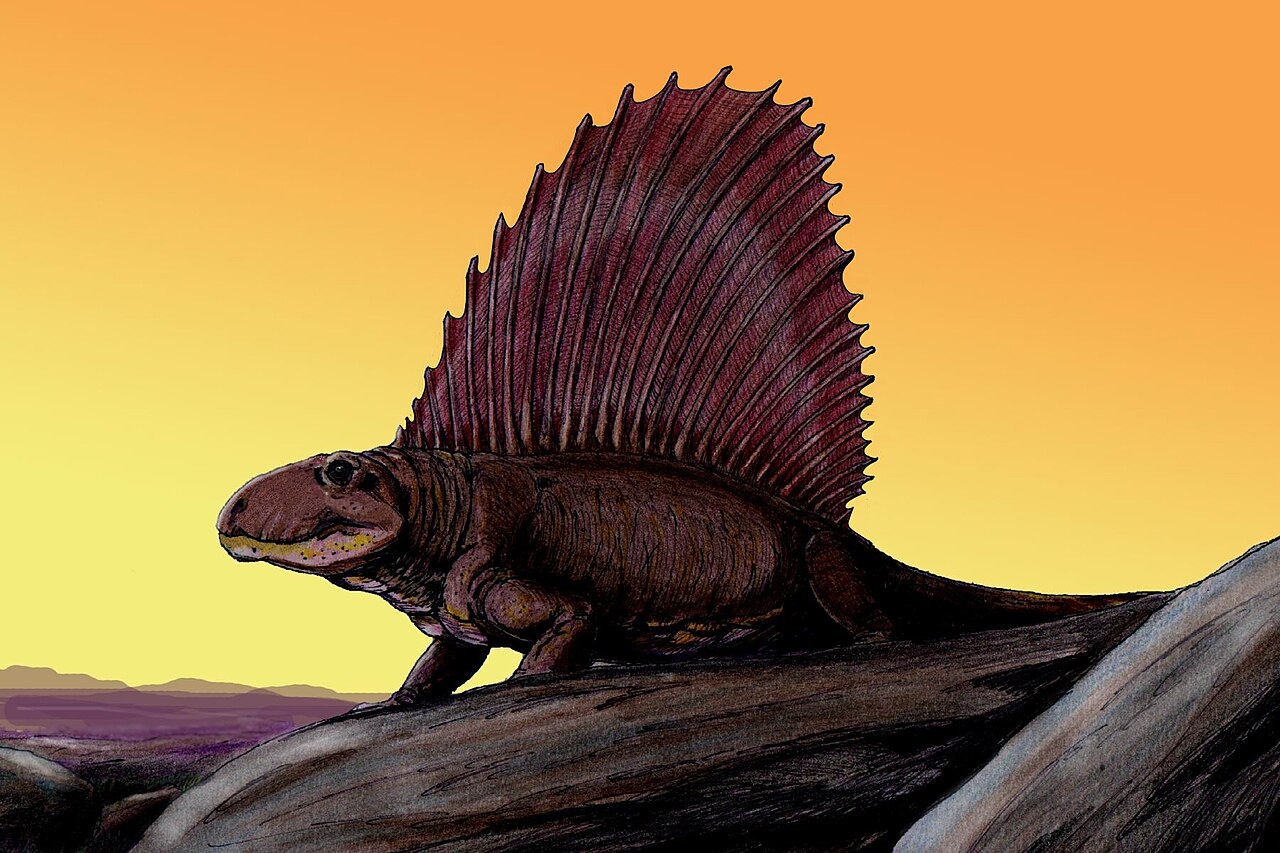
Standing between 1.7 and 4.6 meters in length and weighing anywhere from 28 to 250 kilograms, Dimetrodon would have been a commanding presence in any Permian landscape. Its most arresting feature was the towering sail that rose from its back, built from dramatically elongated neural spines projecting off the vertebrae. Despite this dramatic profile, the animal was strictly a quadruped, capable of locomotion on four legs only. Its skull was tall and curved, bristling with large teeth that varied noticeably in size along the jawline. For decades the sail's function sparked genuine scientific debate. One long-held hypothesis proposed that it served as a thermal radiator, helping the animal warm up or cool down. However, more recent analyses have cast serious doubt on this idea: large-bodied species turned up with relatively modest sails, while smaller individuals bore disproportionately large ones, a pattern that undermines a simple heat-exchange explanation. The prevailing view now leans toward a social function. The sail most likely played a central role in courtship displays, allowing individuals to advertise themselves to potential mates or to posture aggressively against rivals. A secondary possibility is that the structure helped stabilize the spine during movement.
Not a Dinosaur, Not a Reptile
Popular culture has long misfiled Dimetrodon alongside the dinosaurs, depicting it as a contemporary of Cretaceous giants. The reality is far more dramatic: Dimetrodon vanished by the middle Permian, roughly 40 million years before the first dinosaurs appeared. Its true evolutionary position is equally surprising. Though its body plan looks reptilian, the animal sits on the synapsid branch of the vertebrate tree, making it a far closer relative of mammals than of lizards or birds. Specifically, its family is the closest sister group to the therapsids, the lineage that eventually produced the direct ancestors of modern mammals. This relationship has generated a tangled taxonomic history. For much of the twentieth century, Dimetrodon was lumped into the catch-all group "pelycosaurs," a label now regarded as obsolete and replaced by terms like "basal synapsids." The older phrase "mammal-like reptile" also fell out of favor, even though Dimetrodon does share certain mammalian traits such as differentiated tooth types and possibly some degree of endothermy. A key anatomical marker of its synapsid identity is the single temporal fenestra behind each eye, a feature absent in the skulls of true reptiles and birds, which belong to the separate Sauropsida clade that split from synapsids as early as the Late Carboniferous.
From Prince Edward Island to the Texas Red Beds
The story of Dimetrodon's discovery stretches back further than most fans realize. In 1845, a man named Donald McLeod recovered a maxilla on Prince Edward Island, then a British colony. The specimen was purchased by Canadian geologist John William Johnson and eventually described in 1854 by Joseph Leidy as the jaw of a large carnivore called Bathygnathus borealis. It was not until 2015 that researchers reclassified it as Dimetrodon borealis, and a formal petition to the International Commission on Zoological Nomenclature to conserve the name Dimetrodon and suppress Bathygnathus was approved in 2019. The genus itself was erected in 1878 by Edward Drinker Cope, who named three species in the Proceedings of the American Philosophical Society. His material came from collectors working the Texas Red Beds, including Swiss naturalist Jacob Boll, Texas geologist W. F. Cummins, and amateur paleontologist Charles Hazelius Sternberg. Sternberg also forwarded some specimens to Ferdinand Broili in Munich, while Cope's rival Othniel Charles Marsh collected additional bones. Cope's 1878 paper described a sail-backed specimen for the first time, though he called the structure a "fin" and drew comparisons to the basilisk lizard. By 1886 he was openly puzzled by its function. Since then, over a dozen species have been named, and fossils have turned up not only in Texas and Oklahoma but also in Germany.
Apex Predator of the Cisuralian
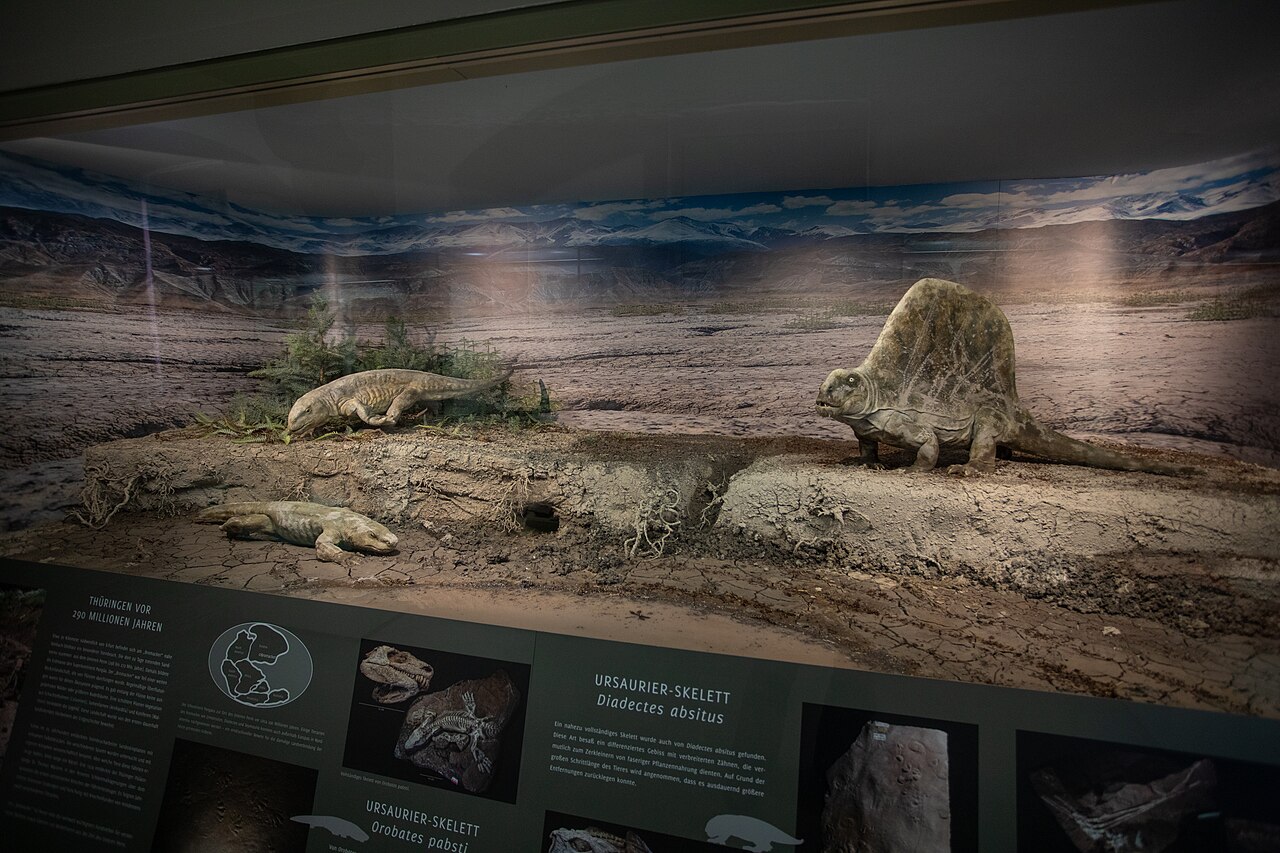
Dimetrodon roamed the Earth between roughly 294 and 271 million years ago, spanning the Cisuralian through the early Guadalupian stages of the Permian. In those ecosystems it was almost certainly one of the top predators, preying on fish as well as a variety of tetrapods including reptiles and amphibians. The large, variably sized teeth lining its curved jaws were well suited for seizing and processing such prey. Not every species in the genus played the same ecological card. Smaller Dimetrodon species may have occupied different niches, perhaps targeting smaller prey or foraging in habitats where the largest individuals could not compete effectively. The social behavior implied by the sail's likely display function adds another layer: in a world without feathers or fur, the sail would have been the primary visual signal in mate selection and territorial disputes. The genus' fossil record is concentrated in the Southwestern United States, with the vast majority of specimens coming from the Red Beds of Texas and Oklahoma. More recently, finds in Germany and the reclassification of the Prince Edward Island maxilla have broadened the geographic picture. Despite over a century of study, Dimetrodon remains a creature whose full behavioral repertoire we are only beginning to reconstruct.
Gallery
Frequently Asked Questions
Is Dimetrodon a dinosaur?
No—Dimetrodon is a synapsid, a lineage that branches off toward mammals rather than toward reptiles or dinosaurs. It actually went extinct roughly 40 million years before the first dinosaurs even showed up.
What was Dimetrodon's sail actually for?
The tall neural-spine sail is its most iconic feature, but its exact purpose is still debated among paleontologists. The leading hypotheses are thermoregulation (soaking up or shedding heat) and visual display for mating or territorial signaling.
How big was Dimetrodon?
Most species measured somewhere between 1.7 and 4.6 meters (about 5.6 to 15 feet) in total length. At that size, it sat at the top of the food chain in its Cisuralian ecosystems.
When and where did Dimetrodon live?
Dimetrodon was a Permian synapsid that thrived during the Cisuralian age, with fossils found across what are now North America and Europe. It occupied an apex-predator niche in those early Permian landscapes.
How is Dimetrodon related to mammals?
It belongs to the sister family of therapsids, the group that eventually produced the direct ancestors of modern mammals. That makes Dimetrodon evolutionarily closer to us than to any reptile, despite its lizard-like look.
More in Prehistoric Synapsids 1-19
Spotted an error? Know more?
This is a living reference — every entry is fact-audited, and reader corrections feed straight into our audit queue. Suggest an edit · See this site's audit record